
The Cost of One Second: Why Commissioning is Key to Data Center Success
In the world of hyperscale data centers, there is a massive difference between a facility that is built and a facility that is ready.
Imagine a massive, state-of-the-art data center: hundreds of thousands of square feet, a complex web of direct-to-chip liquid cooling loops, high-voltage 800V DC power architectures, and arrays of next-generation AI server racks. The concrete has been cured, the equipment is mounted, and the wires are connected.
But if you flip the switch right now without a rigorous commissioning (Cx) process, you aren’t launching a digital asset—you are gambling with hundreds of millions of dollars.
Here is the truth that every tech giant and cloud provider understands: Commissioning is the ultimate insurance policy for hyperscale success. It is the exact process that bridges the gap between engineering theory and real-world execution.
- The Flaw in the “As-Built” World
When a data center is being constructed, it is built by dozens of different contractors, each focusing on their specific trade. The mechanical team installs the chillers, the electrical team hooks up the Uninterruptible Power Supplies (UPS), and the controls team routes the fiber network.
On paper, every individual piece of equipment comes with a factory warranty and a spec sheet saying it works perfectly. But a data center isn’t a collection of independent machines, it is a living, breathing ecosystem.
Commissioning is the process of testing how these separate systems interact when they are forced to talk to each other under extreme pressure. What happens to the mechanical cooling loop if the primary electrical grid drops out for 50 milliseconds? Does the backup generator array kick on and synchronize fast enough to prevent a server reboot? If the controls system sends a false alarm, do the fire suppression systems handle it correctly?
Our commissioning teams look for the hidden gaps between trades that would otherwise only reveal themselves during a live, catastrophic outage.
- The Mind-Boggling Cost of Downtime
In standard commercial real estate, if an air conditioning unit fails or a circuit breaker trip, it’s an inconvenience. In a hyperscale data center hosting critical banking data, global cloud infrastructure, or live AI applications, it is a financial emergency.
According to the latest industry surveys tracking data center operational health:
- The Per-Minute Price Tag: The average cost of a major data center outage has climbed past $11,000 per minute.
- The Massive Incidents: For true hyperscale facilities, a comprehensive, multi-hour power or cooling failure can easily trigger direct losses exceeding $1 million to $5 million in a single afternoon—not to mention the irreversible damage to a tech company’s brand reputation and stock value.
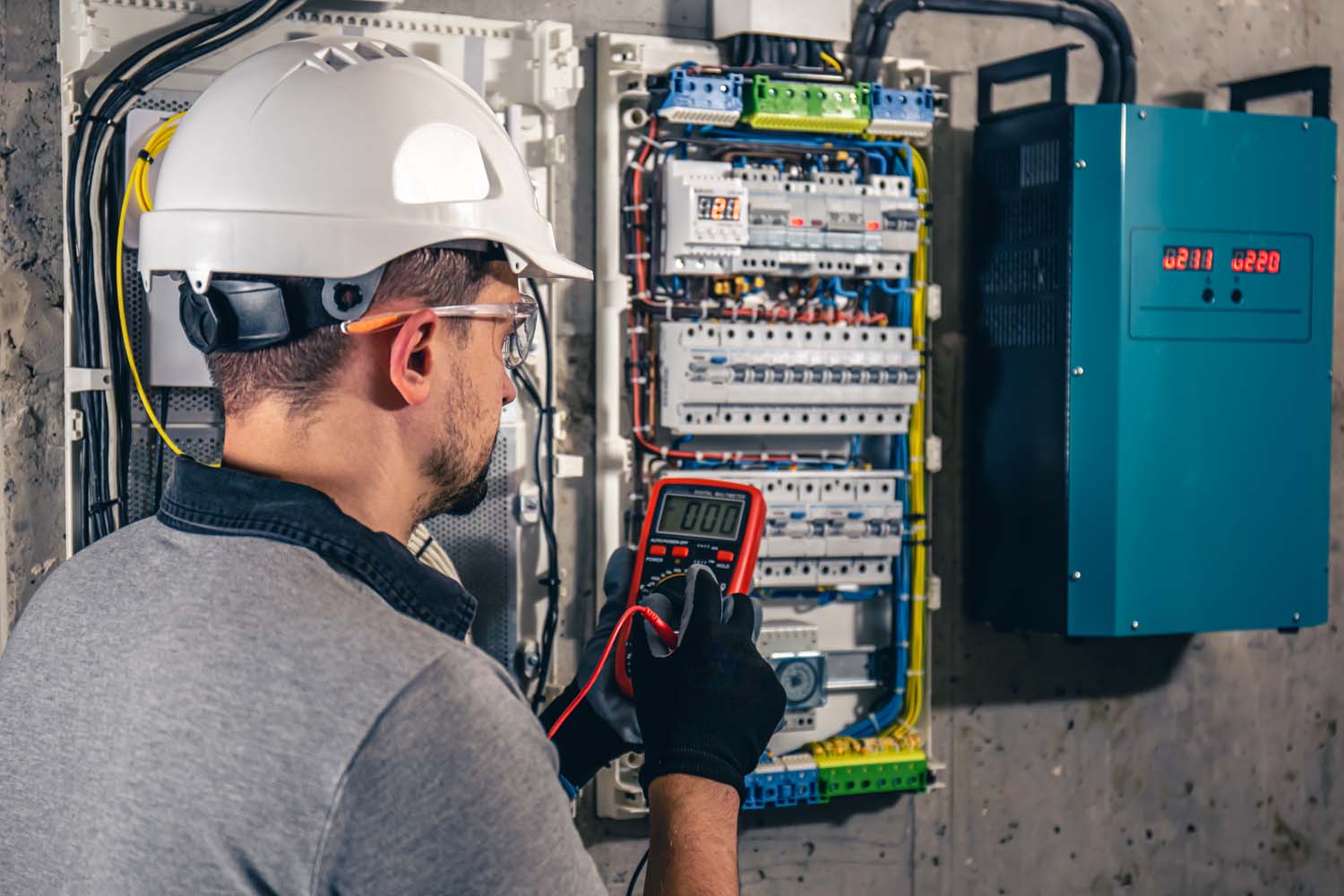
Rigorous commissioning pushes a facility to its absolute breaking point before the servers are installed. We use massive load banks to mimic the heat and power draw of thousands of servers, intentionally inducing failures, grid drops, and thermal spikes. We force the facility to fail in a controlled environment, so it never fails when the world is relying on it.
- Maximizing Power Usage Effectiveness (PUE)
With global data center energy consumption skyrocketing, efficiency isn’t just about environmental responsibility, it is a core business metric. Hyperscalers live and die by their PUE (Power Usage Effectiveness) ratio, which measures how much power reaches the computer servers versus how much is wasted on cooling and lighting.
A data center can have the most efficient design in the world on a digital blueprint, but if a valve is installed backward, a chiller is calibrated poorly, or an airflow panel is slightly misaligned, the facility will bleed energy.
Integrated Systems Testing (IST) is the peak stage of the commissioning process that safeguards this efficiency. By fine-tuning the harmony between power input and mechanical cooling output under varied operational loads, commissioning turns a designed PUE into a real-world, cost-saving baseline.
- Accelerating Speed-to-Market Safely
Right now, the demand for AI computing capacity is outstripping supply. Tech giants are in an absolute footrace to bring capacity online. Every week a project is delayed waiting for completion is a week of massive lost market share.
It sounds counterintuitive, but a dedicated commissioning process speeds up the deployment timeline. By embedding Cx engineers early in the design and construction phases, design flaws and equipment defects are caught in the submittal stage—long before concrete is poured. Catching a mechanical piping error on a digital drawing costs zero dollars. Fixing that same piping error after it has been buried under a server room floor can delay a launch by months.
The Final Word: Building a data center requires a massive mobilization of raw power and steel. But commissioning requires a masterclass in precision engineering. At our company, we don’t just see commissioning as a phase of construction, we see it as the vital process that breathes life into the infrastructure powering the digital world.
Discover more from CriticalCxE
Subscribe to get the latest posts sent to your email.
Related Posts
Cx Explained
The New Geography